A Letter from Lena: The Gladiators of San Michele
The historical quirks of language are always curious—especially in a country like Italy, where history lingers in every word, and dialects rebel against uniformity. Italian, with its aristocratic Latin roots and proudly local flair, holds two names for the iris: Il Giglio and Il Giaggiolo.
Il Giglio, the noble name for the fleur-de-lys—the emblem of Florence—confusingly refers to both the iris and the lily. Since the 11th century, these flowers have been mistaken for one another in drawings and poems and spoken word. The iris of Florence is a tall, slender creature, opening up in thin white or delicately blue petals in force either end of April or beginning of May. It is an ancestral flower, as if the Florentines sensed its power to never change and picked the perfect symbol for their city – this type of iris breeds under the earth, through rhizome, unperturbed by the chaos above.
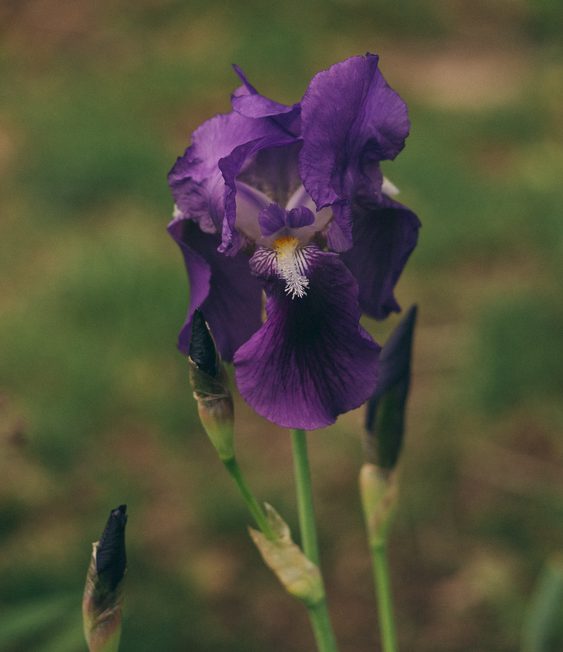
But it wasn’t only a symbol. It was a resource. The bulbs were harvested, ground, and transformed into precious perfume. To distinguish it from the lily, locals gave it a new name: Il Giaggiolo. From gladiolo, meaning “little sword,” a nod to its blade-like leaves—fierce and elegant. The gladiators of the flower world.
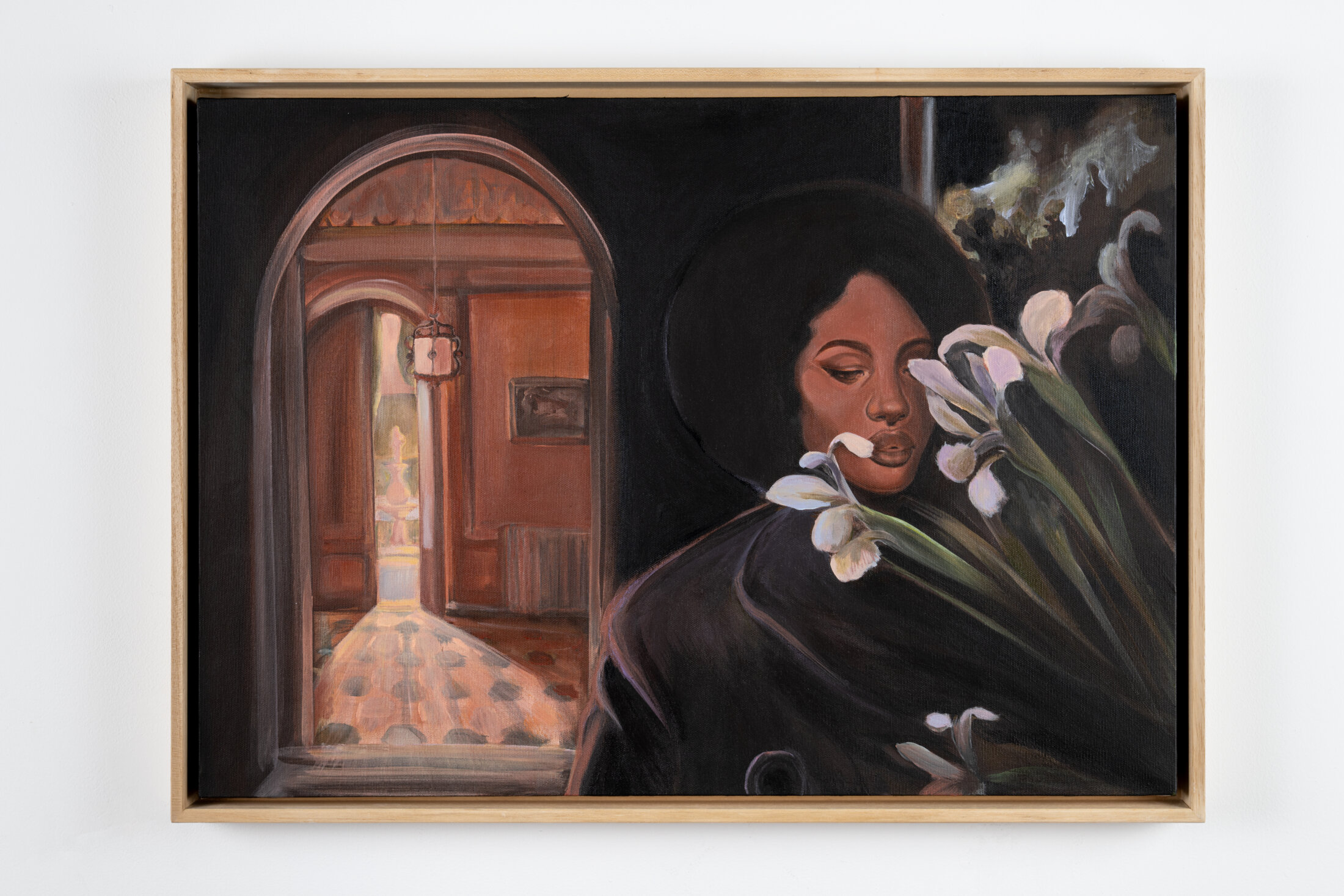
Megan Gabrielle Harris Iris, 2025 Acrylic on canvas, Villa Lena Collection, by Leonardo Morfini
Villa Lena stands on the ley line of Archangel Michael, the so-called Sword of Saint Michael,stretching from Israel to Ireland. Our land lies directly on this sacred axis. In Italy, the oldest celebration of Saint Michael falls on the 8th of May—the same day as the Festa del Giaggiolo. A hidden alignment, like the iris rhizomes underfoot.
Here, the irises bloom along sandy paths and in our gardens, their green swords rising proudly. They are our angelic gladiators—quiet guardians of spring, both celestial and earthly.
— Lena Evstafieva